Introduction
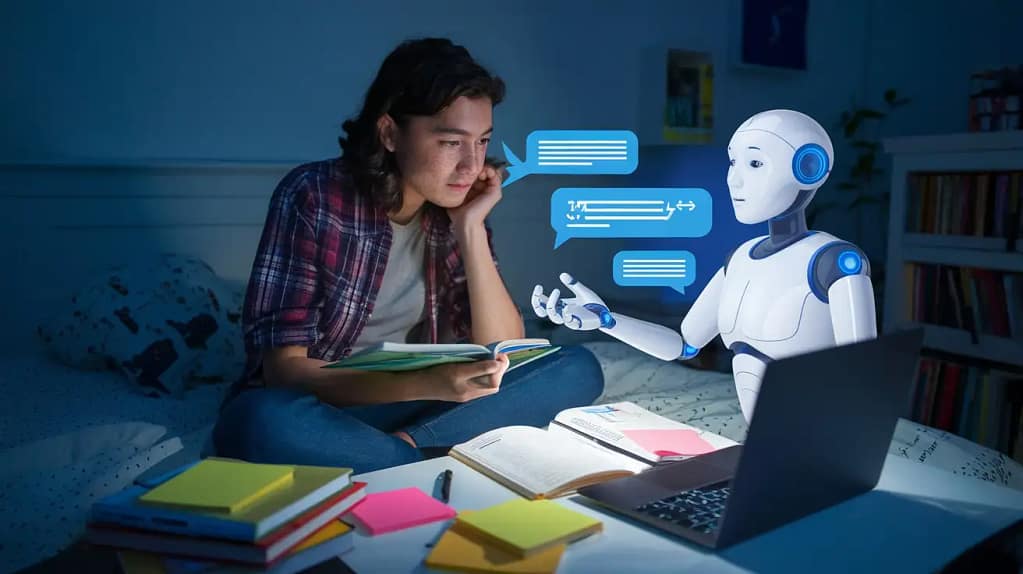
Artificial Intelligence is no longer a futuristic concept in education—it is already reshaping classrooms in powerful ways. One of the most impactful innovations is the rise of AI tutors, intelligent systems designed to support students with personalized, real-time learning assistance.
Unlike traditional teaching models, where one teacher manages an entire classroom, AI tutors provide one-on-one guidance tailored to each student’s needs. They are available 24/7, adapt to individual learning speeds, and offer instant feedback.
As schools and EdTech platforms continue to integrate AI technologies, AI tutors are becoming a key component of modern digital learning ecosystems.
What Are AI Tutors?
AI tutors are software-based learning assistants powered by artificial intelligence that help students understand concepts, solve problems, and improve performance.
They can:
- Answer student questions instantly
- Provide step-by-step explanations
- Offer practice exercises
- Track learning progress
These systems simulate a real tutor by interacting with students in a conversational and adaptive manner.
How AI Tutors Work
AI tutors rely on advanced technologies such as:
- Machine Learning: Learns from student behavior and improves over time
- Natural Language Processing (NLP): Understands and responds to student queries
- Data Analytics: Tracks performance and suggests improvements
By combining these technologies, AI tutors create personalized learning experiences for every student.
Key Features of AI Tutoring Systems
Modern AI tutors come with several powerful features:
1. Personalized Learning Paths
Content is tailored based on student performance.
2. Instant Feedback
Students receive immediate corrections and explanations.
3. 24/7 Availability
Learning is not limited by time or location.
4. Interactive Learning
Conversational interfaces make learning engaging.
5. Progress Tracking
Detailed insights into student performance.
Benefits for Students
AI tutors offer numerous advantages that enhance learning outcomes.
1. Individual Attention
Every student gets personalized support.
2. Self-Paced Learning
Students can learn at their own speed.
3. Improved Understanding
Complex topics are broken down into simpler steps.
4. Increased Confidence
Students can ask questions without hesitation.
Benefits for Teachers
AI tutors are not replacing teachers—they are supporting them.
- Reduced Workload: Automates repetitive tasks
- Better Insights: Provides data on student performance
- Focused Teaching: Teachers can spend more time on critical areas
- Classroom Efficiency: Helps manage large groups effectively
This allows teachers to act more as mentors and facilitators.
AI Tutors in School Classrooms
Schools are increasingly integrating AI tutors into their systems.
Use cases include:
- Homework assistance
- Revision support
- Doubt-solving platforms
- Skill-based learning modules
AI tutors are especially useful in large classrooms where individual attention is limited.
Role in Personalized Education
Personalization is one of the biggest advantages of AI in education.
AI tutors:
- Adapt to learning styles
- Adjust difficulty levels
- Recommend targeted content
This ensures that each student receives a customized learning experience.
AI Tutors vs Traditional Tutoring
While traditional tutors offer human interaction, AI tutors provide:
- Instant availability
- Scalability
- Data-driven insights
- Cost-effectiveness
However, human teachers still play a critical role in emotional and social development.
Challenges and Limitations
Despite their advantages, AI tutors face several challenges:
1. Lack of Human Touch
Cannot fully replace emotional support from teachers.
2. Data Privacy Concerns
Handling student data requires strong security measures.
3. Dependence on Technology
Requires devices and internet access.
4. Accuracy Limitations
AI systems may not always provide perfect answers.
Balancing AI use with human teaching is essential.
Real-World Applications
AI tutors are already being used across various educational levels.
Examples include:
- Language learning apps
- Math problem-solving platforms
- Coding education tools
- Exam preparation systems
These applications demonstrate the practical value of AI in education.
Future of AI Tutors in Education
The future of AI tutors looks highly promising.
Expected developments include:
- Voice-based AI tutors
- Emotion-aware learning systems
- Integration with AR/VR
- Hyper-personalized education
These advancements will make learning more immersive and effective.
Conclusion
AI tutors are transforming education by making learning more personalized, accessible, and efficient. They provide students with continuous support while helping teachers manage classrooms more effectively.
Although they cannot replace human educators, they serve as powerful tools that enhance the overall learning experience. As technology continues to evolve, AI tutors will play an increasingly important role in shaping the future of education.
The shift toward intelligent learning systems is clear—and AI tutors are at the center of this transformation.