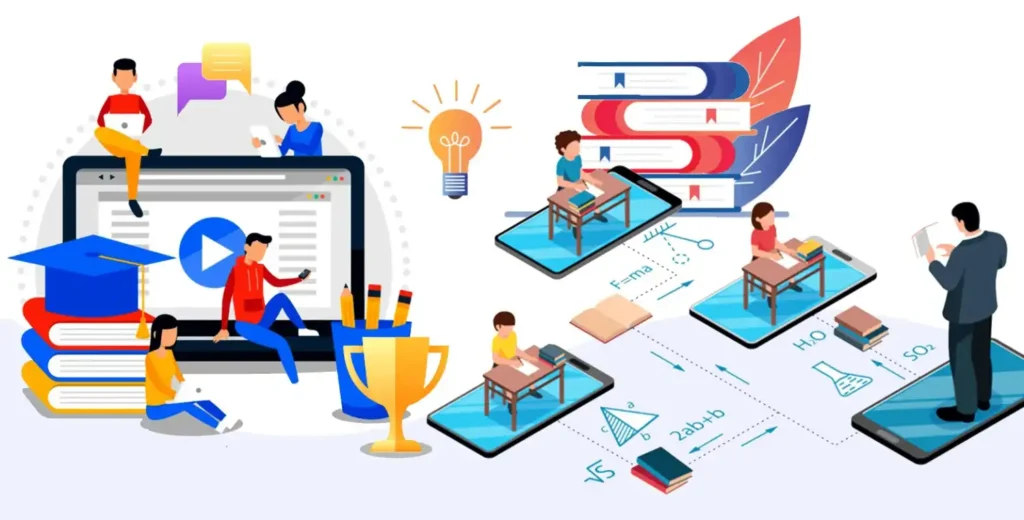
Introduction: Education Is No Longer Just About Teaching — It’s About Systems
When people talk about modern education, the focus is often on learning methods, digital apps, or artificial intelligence. But beneath all of that, a deeper transformation is happening — one that is less visible but far more important.
Schools and universities are not just changing how they teach. They are changing the entire infrastructure of education itself.
From smart classrooms to cloud-based administration systems, from digital attendance tracking to connected learning environments, education is becoming a fully integrated technological ecosystem.
In 2026, education is no longer just about teachers and students. It is about systems, networks, devices, and data working together silently in the background.
This is the rise of smart education infrastructure — the foundation of modern learning.
1. The Smart Classroom Revolution: Beyond Whiteboards and Projectors
Traditional classrooms were built for a different era — chalkboards, benches, printed textbooks, and face-to-face instruction.
Today, classrooms are being redesigned with technology at their core.
Modern smart classrooms include:
- Interactive digital boards
- High-speed internet connectivity
- Cloud-based lesson storage
- Real-time content sharing systems
- Multimedia learning displays
This allows teachers to move beyond static teaching and create dynamic learning environments.
For example:
- Science lessons now include live simulations
- Geography classes use real-time mapping systems
- History lessons include interactive timelines and videos
Learning is becoming visual, interactive, and immersive.
However, the most important change is not the tools themselves — it is the integration of all systems into one connected classroom environment.
2. Cloud-Based Education Systems: The End of Physical Limitations
One of the most powerful changes in education infrastructure is the shift to cloud-based systems.
Earlier, student records, assignments, and learning materials were stored locally in:
- Physical files
- School servers
- Personal notebooks
Now, everything is moving to the cloud.
This includes:
- Student academic records
- Attendance systems
- Homework submissions
- Exam results
- Learning materials and notes
Cloud-based systems allow:
- Instant access from anywhere
- Real-time updates
- Secure data storage
- Easy sharing between teachers and students
This eliminates physical barriers in education management.
A student can now access their entire academic history from any device, anywhere in the world.
3. Digital Attendance and Monitoring Systems
Attendance tracking has also evolved significantly.
Instead of manual registers, schools now use:
- Biometric scanners
- RFID-based entry systems
- QR code check-ins
- Smart ID cards
These systems automatically record student presence and update central databases in real time.
This reduces:
- Human error
- Time consumption
- Administrative workload
It also allows institutions to track attendance trends and identify learning patterns.
For example:
- Frequent absenteeism alerts
- Performance correlation with attendance
- Early identification of disengaged students
This turns attendance into a data-driven educational tool rather than a formality.
4. Connected Learning Ecosystems: When Everything Talks to Everything
One of the most important developments in education technology is system integration.
In modern institutions, different systems are now connected:
- Learning platforms
- Examination systems
- Attendance systems
- Library databases
- Communication tools
These systems communicate with each other in real time.
For example:
- A student submits an assignment → system updates progress automatically
- Attendance affects participation scores
- Library usage is linked to academic performance
- Notifications are sent automatically to students and parents
This creates a fully connected education ecosystem where every action is recorded, analyzed, and integrated.
5. The Role of High-Speed Internet in Education Transformation
None of this infrastructure would be possible without reliable internet connectivity.
High-speed internet has become the backbone of modern education.
It enables:
- Real-time video streaming of lectures
- Cloud-based collaboration
- Instant access to global resources
- Remote participation in classes
- Digital exams and assessments
In urban areas, this transformation is already visible. However, in many rural regions, connectivity remains a major challenge.
This creates an uneven distribution of educational quality based purely on infrastructure availability.
6. Digital Libraries: The End of Physical Knowledge Boundaries
Libraries have traditionally been physical spaces filled with books, journals, and reference materials.
Now, they are becoming fully digital.
Modern digital libraries offer:
- E-books and research papers
- Audio and video learning materials
- Searchable academic databases
- Remote access for students
- Multi-language content availability
This has transformed access to knowledge.
A student no longer needs to physically visit a library. Instead, they can access thousands of resources instantly through a device.
This shift is especially important for higher education and research institutions.
7. Administrative Automation: Schools as Digital Organizations
Beyond classrooms, school administration is also undergoing a technological transformation.
Modern education institutions now use digital systems for:
- Fee management
- Enrollment processes
- Exam scheduling
- Result publishing
- Communication with parents
This reduces manual paperwork and increases efficiency.
Schools are becoming digitally managed organizations, similar to modern enterprises.
Administrative staff now focus less on paperwork and more on system coordination and student support.
8. The Student Experience Is Becoming Fully Digital
The student experience has changed dramatically.
Today’s students interact with education through:
- Mobile apps
- Online dashboards
- Digital submissions
- Virtual classrooms
- Real-time feedback systems
They can:
- Track academic performance instantly
- Receive notifications about assignments
- Access learning materials anytime
- Communicate with teachers digitally
Education is no longer limited to physical presence — it is a continuous digital experience.
9. The Infrastructure Gap: A Growing Global Challenge
While advanced institutions are rapidly adopting smart education infrastructure, not all regions are moving at the same speed.
The main challenges include:
- Lack of funding
- Poor internet connectivity
- Limited access to devices
- Insufficient technical training for teachers
- Maintenance issues for digital systems
This creates a significant gap between:
- Digitally advanced institutions
- Traditional under-resourced schools
If this gap continues to grow, it may lead to unequal education quality across regions.
10. Security and Data Management in Digital Education
As education becomes more digital, data security becomes critical.
Schools now store:
- Student identities
- Academic records
- Behavioral data
- Attendance history
- Financial information
This makes education systems a target for cyber risks if not properly secured.
Institutions are now investing in:
- Secure cloud storage
- Encrypted databases
- Access control systems
- Regular system audits
Data protection is becoming a core part of education infrastructure.
11. The Real Impact: Education Is Becoming a System, Not Just a Place
The most important change is philosophical.
Education is no longer just a physical location where teaching happens.
It is now:
- A connected digital system
- A data-driven environment
- A technology-supported ecosystem
- A continuously running network of learning processes
This shift changes everything — from how schools are designed to how students experience learning.
Conclusion: The Invisible Backbone of Modern Education
While discussions often focus on digital tools or learning apps, the real transformation is happening at the infrastructure level.
Smart classrooms, cloud systems, digital libraries, and automated administration are quietly rebuilding education from the ground up.
This change is not dramatic — but it is permanent.
The future of education will depend not only on teachers and students, but on how effectively technology systems support them.
In the end, the question is no longer whether education will become digital.
It already has.
The real question is:
How well are we building the systems that will support the next generation of learners?
SEO Tags
#EducationTechnology #SmartClassroom #DigitalEducation #EdTech2026 #EducationInfrastructure #CloudLearning #DigitalTransformation #FutureOfEducation #TechInSchools #ModernClassrooms #OnlineEducationSystems #DigitalLibraries #EducationSystems